
ESA laws by state
Fair housing protection for assistance animals is federal, so the floor is the same everywhere. What changes at the state line is who may write your letter, how long they must have known you, and what happens to people who fake it.
Start here
The federal baseline every state shares
Before looking up your state, understand what applies regardless of where you live. Most "state ESA law" questions are actually federal questions with a local wrinkle.
Housing is federal
The Fair Housing Act governs reasonable accommodation for assistance animals in covered housing nationwide.
No registry anywhere
No state runs an official ESA or service dog registry that creates rights. Registration numbers are products, not law.
A licensed clinician decides
The letter must come from a professional licensed for your state. That single rule is why the network is organised by state.
ADA access is federal too
A task-trained service dog is analysed the same way in every state. An ESA has no public-access right anywhere.
What actually changes
Four things state law can add on top
In-depth state guides
Full law guides for the five biggest states
Each guide covers the statute by name, what a landlord may lawfully request, how psychiatric service dogs are treated, and the exact steps to file if you are refused.
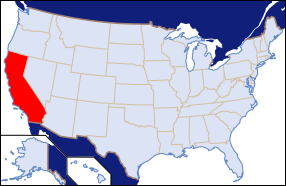
California ESA & PSD laws
The 30-day rule that catches most applicants out
AB 468 (Health & Safety Code / Business & Professions Code) Read the California guide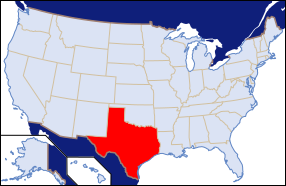
Texas ESA & PSD laws
Federal protection, plus a criminal misrepresentation statute
Texas Human Resources Code Chapter 121 Read the Texas guide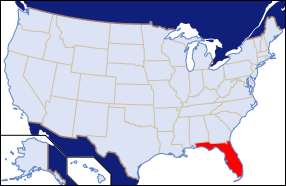
Florida ESA & PSD laws
The state that wrote landlord verification into statute
Florida Statute 760.27 Read the Florida guide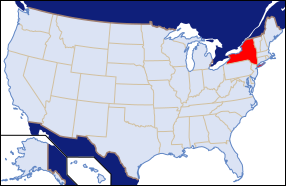
New York ESA & PSD laws
Two layers of protection, and NYC adds a third
New York State Human Rights Law (Executive Law art. 15) Read the New York guide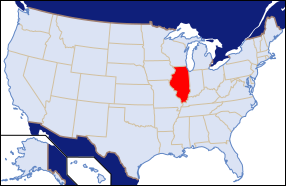
Illinois ESA & PSD laws
The Assistance Animal Integrity Act sets the rules of engagement
Illinois Assistance Animal Integrity Act (765 ILCS 605) Read the Illinois guide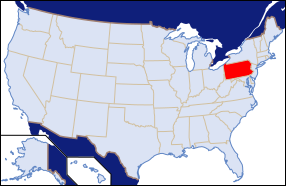
Pennsylvania ESA & PSD laws
Three commissions can hear your complaint
Pennsylvania Human Relations Act Read the Pennsylvania guide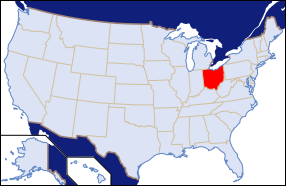
Ohio ESA & PSD laws
Audit your letter before the leasing office does
Ohio Civil Rights Act & ORC 955.43 Read the Ohio guide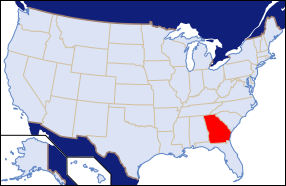
Georgia ESA & PSD laws
What changes the moment your request is approved
Georgia Fair Housing Act Read the Georgia guide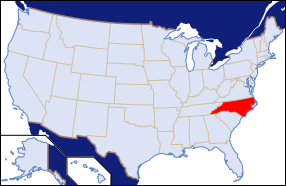
North Carolina ESA & PSD laws
The request process, start to finish
North Carolina Fair Housing Act Read the North Carolina guide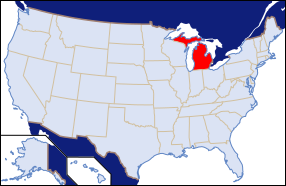
Michigan ESA & PSD laws
The state ID card that is completely optional
Michigan Persons with Disabilities Civil Rights Act Read the Michigan guide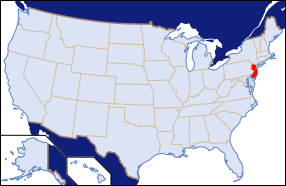
New Jersey ESA & PSD laws
The broadest state housing law in the country
New Jersey Law Against Discrimination Read the New Jersey guide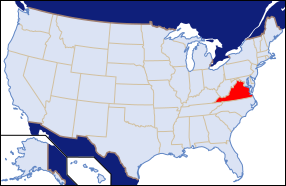
Virginia ESA & PSD laws
Virginia legislated what your letter must contain
Virginia Code § 36-96.3:1 Read the Virginia guide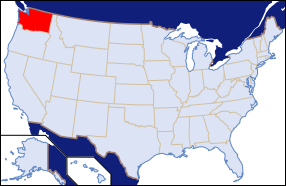
Washington ESA & PSD laws
A $500 civil penalty for faking it
RCW 49.60 — Washington Law Against Discrimination Read the Washington guide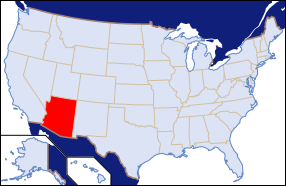
Arizona ESA & PSD laws
What getting the category wrong costs you
Arizona Fair Housing Act & A.R.S. 11-1024 Read the Arizona guide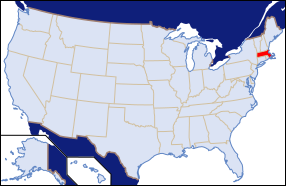
Massachusetts ESA & PSD laws
Build the file before you need it
Massachusetts General Laws Chapter 151B Read the Massachusetts guide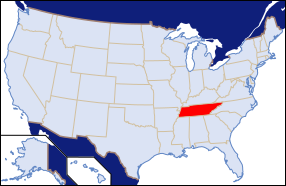
Tennessee ESA & PSD laws
What to do the week a notice arrives
Tennessee Human Rights Act Read the Tennessee guide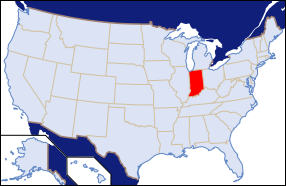
Indiana ESA & PSD laws
The money an approved request puts back in your pocket
Indiana Civil Rights Law & IC 16-32-3 Read the Indiana guide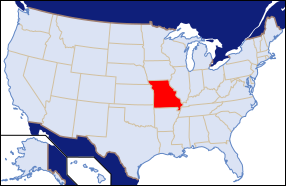
Missouri ESA & PSD laws
How to vet an ESA provider before you pay
Missouri Human Rights Act & RSMo 209.204 Read the Missouri guide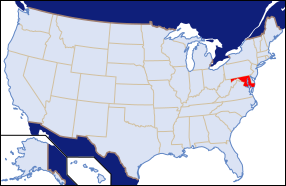
Maryland ESA & PSD laws
Three jurisdictions meet in the DC-Baltimore corridor
Maryland Commission on Civil Rights Read the Maryland guide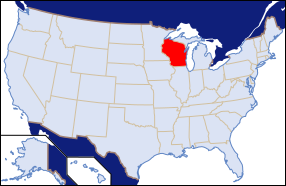
Wisconsin ESA & PSD laws
The state that fines you for fake documentation
Wisconsin Open Housing Law § 106.50 Read the Wisconsin guide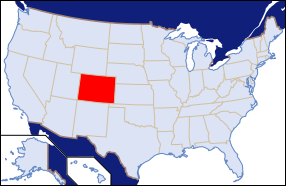
Colorado ESA & PSD laws
Penalties that climb with every repeat offence
C.R.S. 24-34-803 & 18-13-107.3 Read the Colorado guide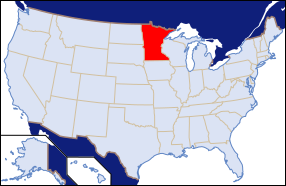
Minnesota ESA & PSD laws
Inside an MDHR charge, step by step
Minnesota Human Rights Act Read the Minnesota guide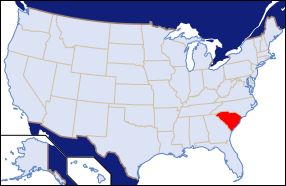
South Carolina ESA & PSD laws
Word-for-word replies to the six things landlords say
South Carolina Fair Housing Law Read the South Carolina guide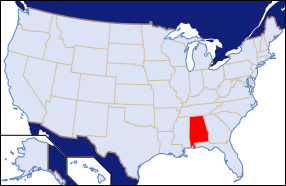
Alabama ESA & PSD laws
A federal-first state, and why that changes your strategy
Federal Fair Housing Act & Ala. Code 21-7 Read the Alabama guide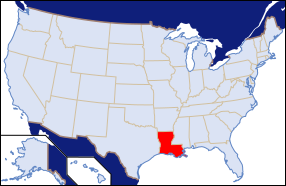
Louisiana ESA & PSD laws
The only civil-law state, and what that means for your lease
Louisiana Equal Housing Opportunity Act Read the Louisiana guide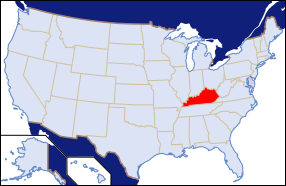
Kentucky ESA & PSD laws
The twelve-month lifecycle of an ESA letter
Kentucky Civil Rights Act (KRS 344) Read the Kentucky guide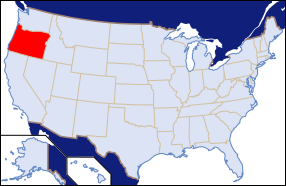
Oregon ESA & PSD laws
Spotting retaliation before it becomes eviction
ORS 659A & Oregon BOLI Civil Rights Read the Oregon guide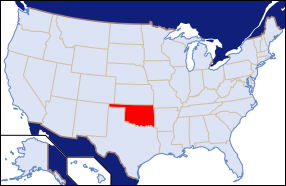
Oklahoma ESA & PSD laws
What happens at renewal, or when the building sells
Oklahoma Discrimination in Housing Act Read the Oklahoma guide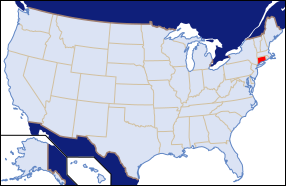
Connecticut ESA & PSD laws
The CHRO clock starts the day you are refused
Conn. Gen. Stat. 46a-64c & CHRO Read the Connecticut guide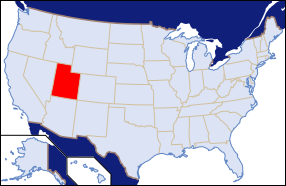
Utah ESA & PSD laws
Which Utah buildings are actually exempt
Utah Fair Housing Act (Utah Code 57-21) Read the Utah guide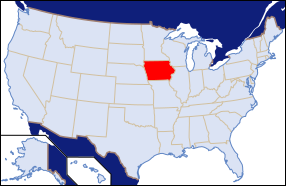
Iowa ESA & PSD laws
What an Iowa landlord may put in writing
Iowa Civil Rights Act (Iowa Code 216) Read the Iowa guide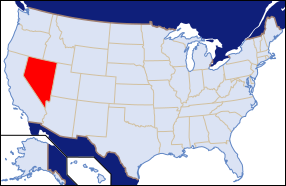
Nevada ESA & PSD laws
Nevada wrote an ESA statute nobody else has
NRS 118.105 — ESAs in rental housing Read the Nevada guide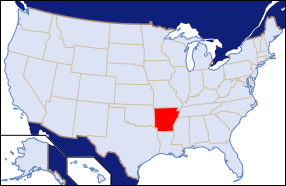
Arkansas ESA & PSD laws
Work out whether your building is even covered
Federal Fair Housing Act coverage & exemptions Read the Arkansas guide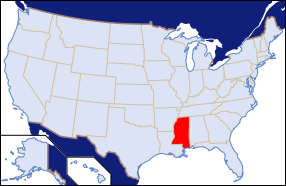
Mississippi ESA & PSD laws
HOAs, parks and manufactured-home communities
Federal FHA & Miss. Code 43-6 Read the Mississippi guide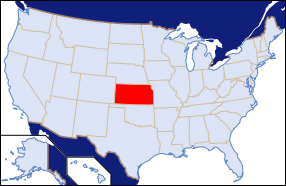
Kansas ESA & PSD laws
Getting an ESA approved in university housing
Kansas Act Against Discrimination Read the Kansas guide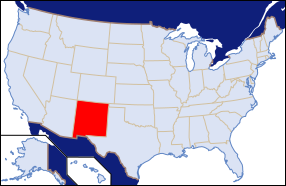
New Mexico ESA & PSD laws
Tribal land housing sits under different rules
New Mexico Human Rights Act Read the New Mexico guide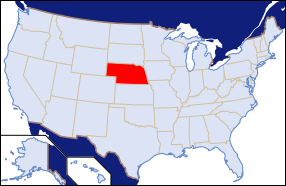
Nebraska ESA & PSD laws
When your landlord is a person, not a company
Nebraska Fair Housing Act & NEOC Read the Nebraska guide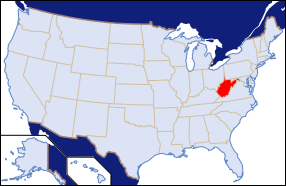
West Virginia ESA & PSD laws
What to do in the thirty days after a denial
West Virginia Human Rights Act Read the West Virginia guide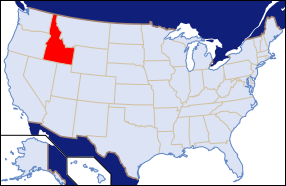
Idaho ESA & PSD laws
Corporate landlords and local owners behave differently
Idaho Human Rights Act Read the Idaho guide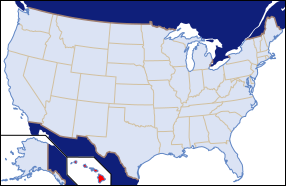
Hawaii ESA & PSD laws
Quarantine rules apply before housing rules do
HRS 515 & Hawaii animal import law Read the Hawaii guide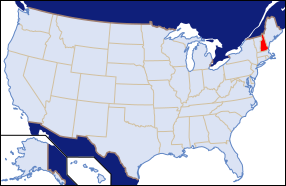
New Hampshire ESA & PSD laws
Where your leverage actually comes from
NH Law Against Discrimination (RSA 354-A) Read the New Hampshire guide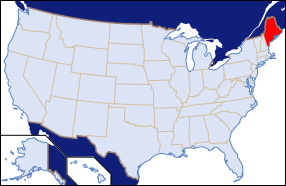
Maine ESA & PSD laws
Seasonal leases and the winter rental trap
Maine Human Rights Act Read the Maine guide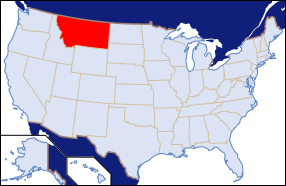
Montana ESA & PSD laws
Telehealth is how rural Montana gets evaluated
Montana Human Rights Act Read the Montana guide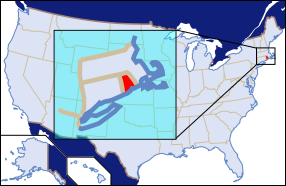
Rhode Island ESA & PSD laws
Shared walls, neighbour complaints and noise
RI Fair Housing Practices Act Read the Rhode Island guide
Delaware ESA & PSD laws
Planned communities run the approval process
Delaware Fair Housing Act Read the Delaware guide
South Dakota ESA & PSD laws
Month-to-month tenancies and very short notice
South Dakota Human Relations Act Read the South Dakota guide
North Dakota ESA & PSD laws
Workforce and employer-arranged housing
North Dakota Housing Discrimination Act Read the North Dakota guide
Alaska ESA & PSD laws
Off-road communities and flying between them
Alaska Human Rights Law (AS 18.80) Read the Alaska guide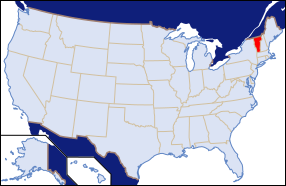
Vermont ESA & PSD laws
Two enforcers: the HRC and the Attorney General
Vermont Fair Housing Act (9 V.S.A. 4503) Read the Vermont guide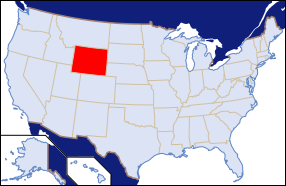
Wyoming ESA & PSD laws
When your housing comes with the job
Federal Fair Housing Act & Wyo. Stat. 35-13 Read the Wyoming guideTrue in all 50 states
What no state law changes
Wherever you live, these hold. They are why the same registry sites get rejected from Maine to Hawaii.
- No state operates an official ESA or service dog registry that creates rights
- A licensed clinician's letter is the document housing providers evaluate
- Emotional support animals have no ADA public-access right anywhere
- Service dog status comes from individual task training, not paperwork
- Landlords may not demand your diagnosis or medical records
- Vests, tags, ID cards and certificates are optional accessories only
If you are moving to another state
Your letter does not expire at the state line, but a housing provider evaluates a current and credible document. After a move it is normal to obtain a fresh letter from a professional licensed in the new state — especially if the existing one is close to a year old, or if you are moving into a state with its own relationship requirement.
Tell support as soon as a move happens mid-process. Licensure follows where you live, and catching it early avoids a letter naming the wrong jurisdiction.
Psychiatric service dogs and state lines
ADA public-access rules do not change when you cross a border — a task-trained service dog is analysed identically everywhere, and no state may fall below that baseline. What remains state-bound is the clinician, because licensure and telehealth rules follow the state you are physically in.
State misrepresentation statutes do vary, which is a reason to keep accurate task documentation rather than a novelty ID card. Compare ESA and PSD before choosing a pathway.
Get matched to a clinician licensed in your state
Because licensure is the part that varies, routing is the part we handle. Start the free screening and your case goes to a professional whose licence covers where you actually live.