
South Carolina: who answers depends on whose land you are on
A great deal of housing in this state is tied to a military installation or sits inside a district with a review board attached. Both facts alter where a request should be sent — and neither alters what may lawfully be asked of you.
Two questions before anything else
Is your home on an installation or off it, and does the property fall inside a district governed by a review board? The first decides who receives a complaint if one becomes necessary. The second decides how much of the refusal you are hearing is actually about the building at all.
On the installation, or off it
The distinction changes the route, the timing and occasionally the vocabulary.
Being posted somewhere does not remove you from the framework. A company operating family housing under contract is a housing provider, and it answers the same two questions any other provider may ask.
What a posting does to the timing
Five practical consequences of a life organised around orders.
What a review board actually controls
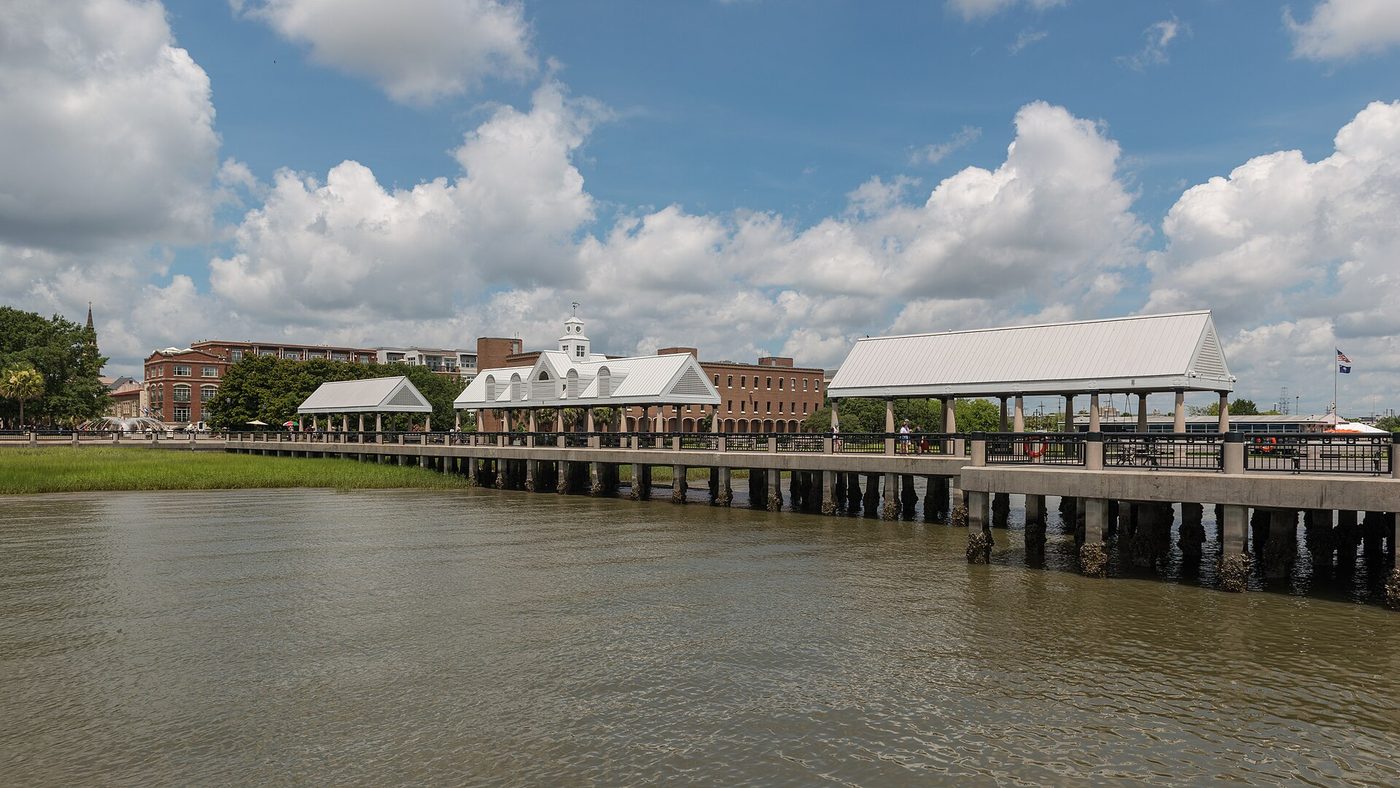
Charleston, Beaufort and Georgetown all sit within districts where alterations are supervised, and landlords in those districts reach for that supervision constantly. It is worth knowing exactly how far it reaches, because it is much shorter than the argument assumes.
A board of that kind concerns itself with the outside of a building and with structural change: what the street sees, what the roofline does, whether a piazza may be enclosed, which materials may replace which. Its jurisdiction is over fabric.
It has never extended to who lives in the rooms behind that fabric. No provision of any preservation scheme has been construed as authorising a landlord to exclude a resident's assistance animal, and none of them mentions residents at all.
If a refusal cites the district, the reply is a question rather than an argument: which lawful footing is being leaned on, and what numbers support it at this address? A refusal has to name conduct by this creature, an outlay shown to be disproportionate at this address, or an adjustment that would fundamentally recast the way the property operates.
Around the state
Where to send it, and when
For a home off the installation the path is the ordinary one: South Carolina Human Affairs Commission receives it, with Region IV - Atlanta standing behind as the national option. Neither charges anything, and the national window closes a year after the refusal.
For housing on the installation, start with the company operating it and use the housing office above them as the escalation. That sequence is both correct and considerably faster than approaching an outside body which then has to work out who runs the property.
Where a subsidy is attached — rent calculated against your income, or a public agency involved in placing you — the funding conditions add a further venue, and asking the housing office directly which process governs your home beats guessing at it.
Whichever route applies, keep paying what is genuinely due while it runs. Keeping back rent to compel an answer supplies a neat and wholly unrelated basis for ending the arrangement, and it is the one misstep that turns a sound case into a fragile one.
Questions from South Carolina
I live in privatised housing on base. Where do I begin?
My orders move me before this is settled. Is it over?
The landlord says the historic district forbids it.
Can they bill a monthly amount while the animal lives here?
South Carolina Human Affairs Commission
The state agency that receives and investigates housing discrimination complaints in South Carolina, alongside HUD.
42 U.S.C. §§ 3601-3619
The federal statute prohibiting housing discrimination, including on the basis of disability. Refusing a reasonable accommodation that a person with a disability needs to use and enjoy a dwelling is a form of discrimination under this Act.
24 CFR § 100.204
HUD's regulation implementing the reasonable accommodation duty, including the example of waiving a no-pets rule for a person who needs an assistance animal.
24 CFR § 100.202
Sets out the general prohibitions on disability discrimination in housing and limits inquiries into whether a person has a disability.
HUD Notice FHEO-2020-01
HUD's central guidance on assistance animals in housing: the difference between a service animal and a support animal, what information a housing provider may request, and how requests should be assessed.